The Great Pathing Crisis How the Season 3 Assassin Cat Mechanic Broke Competitive Cat Chess

Competitive Cat Chess has always danced on a razor edge of balance, blending the strategic positioning of traditional board games with the unpredictable chaos of feline themed auto battler mechanics. However, no issue has ever threatened the core integrity of the game quite like the catastrophic grid pathing logic failure that emerged during the Season 3 competitive cycle. What began as a well intentioned update to increase the viability of Assassin class felines quickly spiraled into a mechanical nightmare, exposing fundamental flaws in the underlying engine of the game. This deep dive explores the chronological unraveling of the game meta, detailing how a single line of movement code transformed the highest tiers of competitive play into an unplayable, deterministic coin flip.
The Dawn of Season 3 and the Feline Agility Rework
Before the turbulent events of the third season, Cat Chess enjoyed a relatively stable, albeit slow paced, competitive environment. The prevailing meta was dominated by heavy Bruiser cats and healing focused Support felines, leading to protracted rounds that often went to the time limit. The development team, eager to inject a sense of speed and dynamism into the professional scene, announced a comprehensive overhaul of the agility systems. This rework aimed to empower fragile, high damage units by granting them enhanced mobility across the hexagonal game board.
The centerpiece of this overhaul was the complete rewriting of the movement pathing algorithms for all units classified as Assassins. Previously, these units calculated their routes to enemy backlines using a standard A star pathfinding method, which was predictable and easily countered by clustering bulky units together in a defensive formation known as the Turtle Box. The new system introduced a mechanic called Feline Intuition, designed to allow Assassins to dynamically recalculate their trajectories mid jump if their landing zone was blocked.
On paper, the Feline Agility Rework was heralded as a brilliant stroke of game design that would finally break the stagnant tank meta. Early internal testing notes suggested that the new movement logic felt incredibly fluid, giving the Assassin cats a lifelike unpredictability. However, the developers failed to account for how this dynamic recalculation would interact with the game engine when pushed to its absolute limits by professional players exploiting exact frame data.
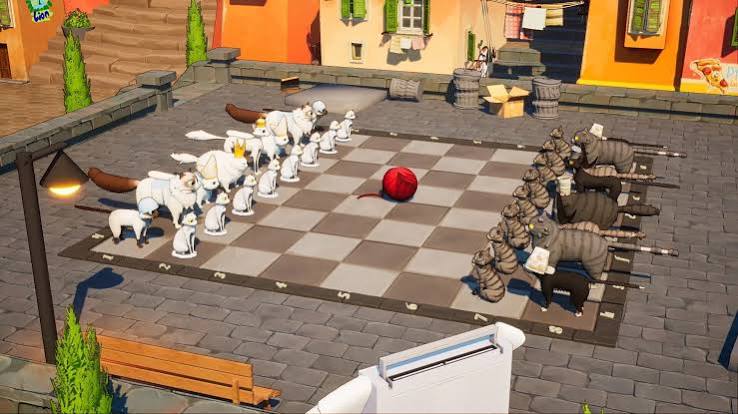
The Introduction of the Pounce Mechanic
As Season 3 officially launched, players immediately flocked to the newly buffed Assassin units to test the limits of the Feline Intuition system. Central to this new system was the Pounce mechanic, an innate ability granted to all tier two and tier three Assassins. Pounce dictated that at the beginning of the combat phase, these units would instantly leap to the furthest unoccupied hex on the opposite side of the board, prioritizing the squishiest enemy targets.
In the first few days of the patch, the Pounce mechanic operated largely as intended in lower skill brackets. Casual players marveled at the visual flair of units like the Siamese Striker and the Bengal Blade launching across the arena to assassinate enemy healers. The mechanic successfully broke apart the heavily fortified defensive formations, forcing players to rethink their positioning and spread their units out to avoid catastrophic backline collapses.
However, underneath this polished veneer, a critical flaw was waiting to be discovered. The Pounce mechanic required an empty hex to land on, but the calculation for determining which hex was empty occurred at the very first frame of the combat phase. If multiple Assassins attempted to Pounce to the exact same hex, or if an enemy unit moved into that hex during the flight time, the engine was forced to rely on the newly implemented, untested secondary displacement logic.
Early Warning Signs in High Elo Lobbies
By the second week of the season, high ranking players in the Grandmaster and Challenger tiers began noticing bizarre interactions regarding the Assassin cats. The first warning sign came from a prominent streamer who documented a match where his fully upgraded Bengal Blade simply vanished from the board for three seconds after attempting a Pounce. When the unit reappeared, it was completely out of bounds, continuously swiping at the empty air while the rest of his team was slaughtered.
These anomalies were initially dismissed by the community as rare, isolated glitches caused by server latency or packet loss. But as more professional players began grinding hours of matches daily, the frequency of these pathing errors skyrocketed. Players realized that by deliberately forcing specific board states, they could reliably trigger the displacement bugs, weaponizing the game engine errors against their opponents.
The turning point occurred when a top tier analyst published a comprehensive breakdown of the bug on the official community forums. The analyst demonstrated that the secondary displacement logic, which was supposed to safely nudge a mid air Assassin to an adjacent tile if their landing zone was suddenly occupied, lacked a maximum iteration cap. This meant the game engine would infinitely loop its search for an open tile, causing massive localized lag spikes and breaking the combat queue entirely.
The Mechanics of the Grid Lock Exploit
Understanding the Pathing Loop
To truly grasp the severity of the situation, one must understand the exact technical failure occurring beneath the surface of the game. When a unit initiated a Pounce, the server assigned it a designated target hex. If the opponent placed an extremely fast moving decoy unit, such as the Savannah Scout, directly adjacent to that target hex, the decoy would inevitably step into the landing zone one frame before the Assassin landed.
The Infinite Displacement Calculation
This collision triggered the flawed secondary displacement logic. The engine asked the Assassin unit to find the next closest tile. However, professional players discovered that if they surrounded the target zone with units holding the Heavy Aura item, the engine would register all adjacent tiles as invalid landing zones. The code would then search the next ring of tiles, but due to a mathematical oversight in the hex grid coordinates, it would round the positional values incorrectly, looping back to the original occupied tile.
Exploiting the Game State
- The attacker positions three Assassin units at the exact rear edge of their board.
- The defender places a decoy unit equipped with a movement speed buff in the predicted landing zone.
- The defender completely walls off the adjacent tiles with Heavy Aura units.
- The combat phase begins, the Assassins leap, the decoy moves, and the engine enters an infinite calculation loop.
Because the server evaluated combat logic sequentially, this infinite loop effectively paused the game state for all other units. The player who initiated the exploit could rely on the game resolving the loop by automatically terminating the highest threat unit on the board to prevent a server crash. In almost all cases, this resulted in the defender losing their most expensive unit instantly and inexplicably.
The Mid Season Tournament Disaster
The theoretical discussions on the forums became a grim reality during the eagerly anticipated Season 3 Mid Season Invitational. With a massive prize pool on the line, competitive integrity was paramount. Yet, the tournament organizers and the developers decided to proceed on the current patch, vastly underestimating how widespread the Grid Lock Exploit had become among the professional circuit.
During the group stages, the exploit was used sparingly, often disguised as accidental pathing anomalies. Players were hesitant to fully commit to the exploit for fear of disqualification. However, the rulebook contained no specific clauses regarding the weaponization of pathing mechanics, and the tournament admins ruled early on that any in game interactions, however bizarre, were considered legal play unless explicitly banned.
The floodgates opened during the semi finals. In a highly publicized match between two rival esports organizations, one player completely abandoned traditional team building strategies. Instead, they drafted a composition entirely dedicated to forcing the infinite loop error. The resulting match was a chaotic, unwatchable mess where units teleported wildly, health bars vanished without attack animations, and the broadcast spectator client repeatedly crashed. The audience was left confused and angry, watching a tactical strategy game devolve into a battle of server manipulation.
Developer Silence and Community Outrage
In the immediate aftermath of the disastrous tournament, the Cat Chess community expected swift and decisive action from the development team. The official game forums and social media channels were flooded with clips of the exploit ruining high stakes matches. Players demanded rollbacks, emergency bans of the Assassin units, or at the very least, a public acknowledgment of the severity of the broken mechanics.
Instead, the development studio remained completely silent for five agonizing days. This period of quiet was later revealed to be a time of internal panic, as the engineering team discovered that fixing the secondary displacement logic would require completely rewriting the foundational grid system of the engine. The code for the Feline Intuition system was deeply entwined with the core combat loop, meaning a simple hotfix was impossible without breaking every other unit in the game.
The lack of communication fueled rampant speculation and toxicity within the player base. Daily active user counts plummeted as climbing the ranked ladder became an exercise in frustration. Every match in the upper echelons of the leaderboard featured players aggressively trying to out exploit one another. The game had stopped being about economy management and synergistic team building, transforming entirely into a rigid, deterministic race to execute the Grid Lock error first.
The Rise of the Counter Meta Anti Pounce Builds
Desperation breeds innovation, and with no patch in sight, the remaining dedicated players were forced to engineer their own solutions to survive the ranked ladder. If the developers could not fix the Pounce mechanic, the community would have to find a way to neutralize it entirely. This led to the rapid development of the most degenerate and passive meta in the history of Cat Chess, known colloquially as the Wall of Yarn strategy.
The Wall of Yarn relied on completely blocking off your own side of the board with cheap, expendable decoy units. Players discovered that if they utilized the Persian Defender class, which had an innate ability to deploy stationary yarn ball obstacles, they could artificially remove playable hexes from their own backline. By systematically filling every single valid landing tile before the combat phase even started, they denied the Assassin units any valid target coordinates.
While this counter strategy effectively stopped the infinite server loops, it resulted in incredibly tedious gameplay. Because players were spending all their gold on defensive obstacles rather than offensive synergies, matches frequently ended in zero to zero draws. The board became a cluttered, impassable maze. The game lost all its dynamic visual appeal, resembling a chaotic traffic jam rather than a tactical battle between agile feline warriors.
The Emergency Hotfix Patch 3 1 2
Finally, in the seventh week of the season, the developers broke their silence and deployed Emergency Patch 3 1 2. The patch notes were unusually lengthy and technical, reading more like an engineering post mortem than a standard balance update. The studio admitted that the Feline Intuition system was a fundamental failure and that their ambition had vastly outpaced the capabilities of their aging proprietary game engine.
The solution implemented in the hotfix was both brutal and ungraceful. To immediately stop the exploit, the developers completely stripped the dynamic recalculation logic from the game. Assassins were reverted to a rudimentary, linear pathing system. If their target hex was occupied upon landing, instead of searching for a new tile, the unit would simply be stunned for two seconds and dropped in the nearest available slot, drastically reducing their effectiveness and damage output.
Furthermore, the developers instituted a hard cap on pathfinding iterations. If the engine could not resolve a unit movement within fifty calculations, the movement was immediately canceled. This solved the server crashing loops but introduced a host of new, smaller bugs where units would randomly freeze in place if surrounded by too many moving pieces. It was a band aid solution, but it was enough to restore a baseline level of playability to the ranked ladder.
Analyzing the Post Patch Rebalancing
The immediate aftermath of Patch 3 1 2 left the Cat Chess meta in a state of whiplash. The Assassin class, once the undeniable kings of the board, became instantly unplayable. Their core identity of agile backline disruption was replaced with clunky, punitive movement mechanics that often resulted in them stunning themselves and dying before dealing any damage. The competitive scene had to completely recalibrate overnight.
Predictably, the heavy Bruiser and Support compositions that dominated Season 2 surged back to the forefront. However, the ecosystem had changed. The developers, in their scramble to fix the pathing issue, had inadvertently altered the collision boxes of all units to prevent overlapping models. This meant that the old Turtle Box defensive formations were much harder to assemble perfectly, leaving slight gaps that ranged attack units could exploit.
This created a bizarre, intermediate meta characterized by widespread experimentation. Professional players, traumatized by the volatility of the Assassin exploit, gravitated toward low risk, highly consistent strategies. The tournaments held in the late stages of Season 3 lacked the explosive highlight reel moments the developers had originally envisioned with the agility rework, but they were finally stable, fair, and free of game breaking engine manipulation.
Long Term Lessons for Auto Battler Pathing Logic
The Great Pathing Crisis of Season 3 remains a seminal case study in competitive game design, particularly within the auto battler genre. The entire ordeal highlighted the extreme dangers of implementing highly dynamic, variable heavy mechanics in an environment where players are incentivized to optimize the fun out of the game. It proved that in strategy games, predictable mechanics, even if they are slightly rigid, are vastly superior to dynamic mechanics that can be reliably broken.
Furthermore, it underscored the vital importance of rigorous technical stress testing. The development team evaluated the Pounce mechanic based on how it functioned in a vacuum, ignoring how it would interact with frame perfect latency manipulation and edge case unit placements. In grid based combat systems, pathfinding logic is the absolute foundation of the game; if the foundation has even a microscopic crack, the competitive player base will drive a wedge into it until the entire structure collapses.
Today, Cat Chess operates on a much more stable, deterministic movement engine. The developers eventually rebuilt the grid system from scratch in Season 5, creating a robust framework that could handle complex unit displacements safely. However, veteran players still look back at Season 3 with a mixture of horror and fascination, remembering the brief, chaotic period when the most powerful move in the game was intentionally crashing the server with a flying cat.
The history of competitive gaming is littered with overpowered characters, broken items, and unbalanced strategies, but rarely does a single mechanical update threaten the very architectural stability of a game. The Season 3 pathing crisis in Cat Chess was a perfect storm of ambitious design, inadequate testing, and a highly analytical player base willing to weaponize code against itself. It serves as a permanent reminder to developers everywhere that when you give a virtual cat the ability to jump anywhere, you must be absolutely certain about where it is going to land.