




Popular Now
1. Master the Physics Interaction
Understanding the physics engine is the core of the Melon Sandbox experience.
Core principles:
- Experiment with weight and friction of different objects.
- Understand how gravity affects various materials.
- Use the "Freeze" function to stabilize complex structures.
- Test the collision boxes of custom items.
Mastering physics allows for more predictable and creative outcomes.

2. Understand Character Anatomy
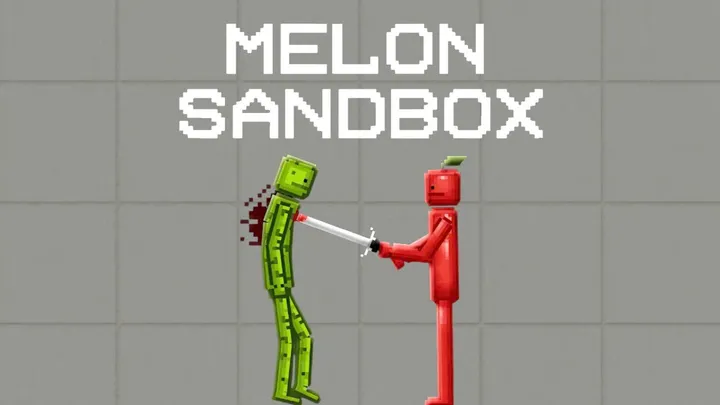
Characters in Melon Sandbox are more than just ragdolls; they have internal systems.
Key features:
- Characters have skeletal structures and vital organs.
- Different layers (skin, flesh, bone) react differently to tools.
- Use the "Syringe" system to alter character states (healing, immortality, etc.).
- Observe how characters react to impact and environmental heat.
Knowing anatomy is essential for creating detailed experimental scenarios.
3. Master the Wiring and Logic Systems
To build advanced machinery, you must learn how to connect components.
Key habits:
- Use different wire types (Rigid, Elastic, Cable) for specific needs.
- Implement sensors and activators to automate sequences.
- Experiment with "Thrusters" and "Rotors" for movement.
- Use logic gates to create complex "If/Then" contraptions.
Proper wiring turns static objects into functional machines.
4. Utilize the Extensive Tool Library
The toolbox provides limitless ways to manipulate the environment.
Tool categories:
- Melee & Firearms: For testing combat and impact physics.
- Explosives: For environmental destruction and propulsion.
- Utility Tools: For resizing, flipping, or parenting objects.
- Environmental Toggles: Changing weather or lighting conditions.
A deep understanding of tools unlocks the game's full creative potential.
5. Explore the Modding and Workshop Features
The community is a massive part of the Melon Sandbox ecosystem.
Priority actions:
- Browse the Steam Workshop (or in-game browser) for community creations.
- Learn how to import custom textures and sprites.
- Save your favorite contraptions as "Saves" for quick spawning.
- Join community forums to share your own complex builds.
Using mods vastly expands the variety of items and characters available.
6. Optimize Performance for Complex Builds
High-object counts can lead to lag and physics glitches.
Optimization tips:
- Disable collision on non-essential decorative parts.
- Use the "Pause" mode when building intricate structures.
- Limit the use of excessive explosives in a single frame.
- Periodically clear the map of debris to maintain a high FPS.
Efficient building ensures a smooth experience even with massive projects.
7. Creative Scenario Building
The game is a blank canvas for storytelling and simulation.
Common themes:
- Crash Tests: Simulating vehicle accidents and impact.
- Dungeon Crawls: Building obstacle courses for characters.
- Inventions: Creating working elevators, cars, or even robots.
- Battle Simulations: Testing different weapon tiers against groups.
Scenario-based playing provides purpose to the sandbox freedom.
8. Master the "Time Stop" Mechanism
The ability to pause and play time is your most powerful editing tool.
Strategy:
- Pause time to precisely position limbs and objects.
- Connect wires while the world is frozen to avoid accidental movement.
- Use slow-motion to capture cinematic destruction.
- Resume time incrementally to "debug" your machines.
Time manipulation allows for surgical precision in your creations.
9. Management of Layers and Parenting
Keeping your build organized prevents it from falling apart.
Management tips:
- Use the "Parent" tool to stick multiple objects together permanently.
- Adjust the "Layer" of objects to prevent visual clipping.
- Group related items into a single saved template.
- Label complex logic systems with visual markers.
Organized builds are easier to modify and share with others.
10. Experiment with Chemical Reactions
Beyond physical impact, chemical syringes change the game's rules.

Preparation checklist:
- Test the "Regeneration" syringe for infinite health experiments.
- Use "Acid" or "Fire" to test material durability.
- Explore the "Virus" syringe for spreading effects among groups.
- Combine different liquids to see unique character mutations.
Chemical experimentation adds a "mad scientist" layer to the gameplay.
Final Thoughts
Melon Sandbox rewards curiosity, patience, and a "what if" mindset. Players who master the balance between chaotic destruction and meticulous engineering will find endless hours of entertainment. Whether you are building a functional car or a giant mechanical titan, the only limit is your imagination.
Plan your build, wire it carefully, and let the chaos unfold!